



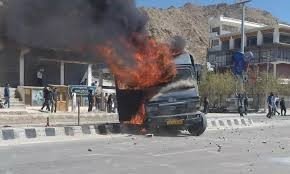
Four people died and at least 30 others sustained injuries during violent clashes in leh on Wednesday. The violence erupted between protesters and security personnel during a shutdown called by the Leh Apex Body (LAB). Eyewitnesses described the scene as chaotic, with protests escalating after demonstrators began attacking vehicles and political offices.
The protests erupted as individuals rallied for statehood for Ladakh and the extension of the Sixth Schedule, which provides for greater autonomy to tribal areas. Police had to use live ammunition to disperse the crowds, which they claim resulted in fatalities among the demonstrators. The protesters, however, alleged that the police were responsible for all four deaths.
Authorities confirmed that the unrest followed a decision to escalate protests after two individuals, part of a 15-member group on a hunger strike demanding statehood since September 10, required hospitalization due to deteriorating health conditions. This strike became a rallying point, amplifying tensions in the region.
Many locals voiced their anger over perceived neglect of their demands, citing a longstanding wait for development and recognition of their rights. The violence marks a significant escalation and raises questions about the management of civil unrest in the sensitive region.
Witness accounts reveal that security forces deployed in Leh struggled to control the situation as protesters clashed with police. Demonstrators reportedly attacked multiple properties, including a local Bharatiya Janata Party (BJP) office, leading to increased tensions in the area.
Several injured were taken to local hospitals, and police authorities have commenced an investigation into the clashes. A spokesperson for the Leh Police stated, “We are reviewing the situation to ensure that peace returns to Leh while respecting the rights of all citizens to protest peacefully.”
In response to the violence, officials imposed a curfew in downtown Leh to prevent further escalation and urged citizens to remain calm. The clampdown appears necessary as the region witnesses heightened sensitivities surrounding issues of governance and representation.
The demand for statehood has garnered support from various segments of the Ladakhi population, who feel excluded from the benefits that other Indian states receive. Political analysts suggest that addressing these longstanding demands could help stabilize the region.
The government’s approach toward Ladakh remains uncertain, with local voices urging immediate attention to their grievances to prevent further violence. Activists vow to continue their fight for statehood and self-determination, even in the face of threats and violence against their movement.
As the situation remains tense in Leh, the coming days may prove critical for both the demonstrators and the local government, as both sides navigate the aftermath of this tragic confrontation.
