



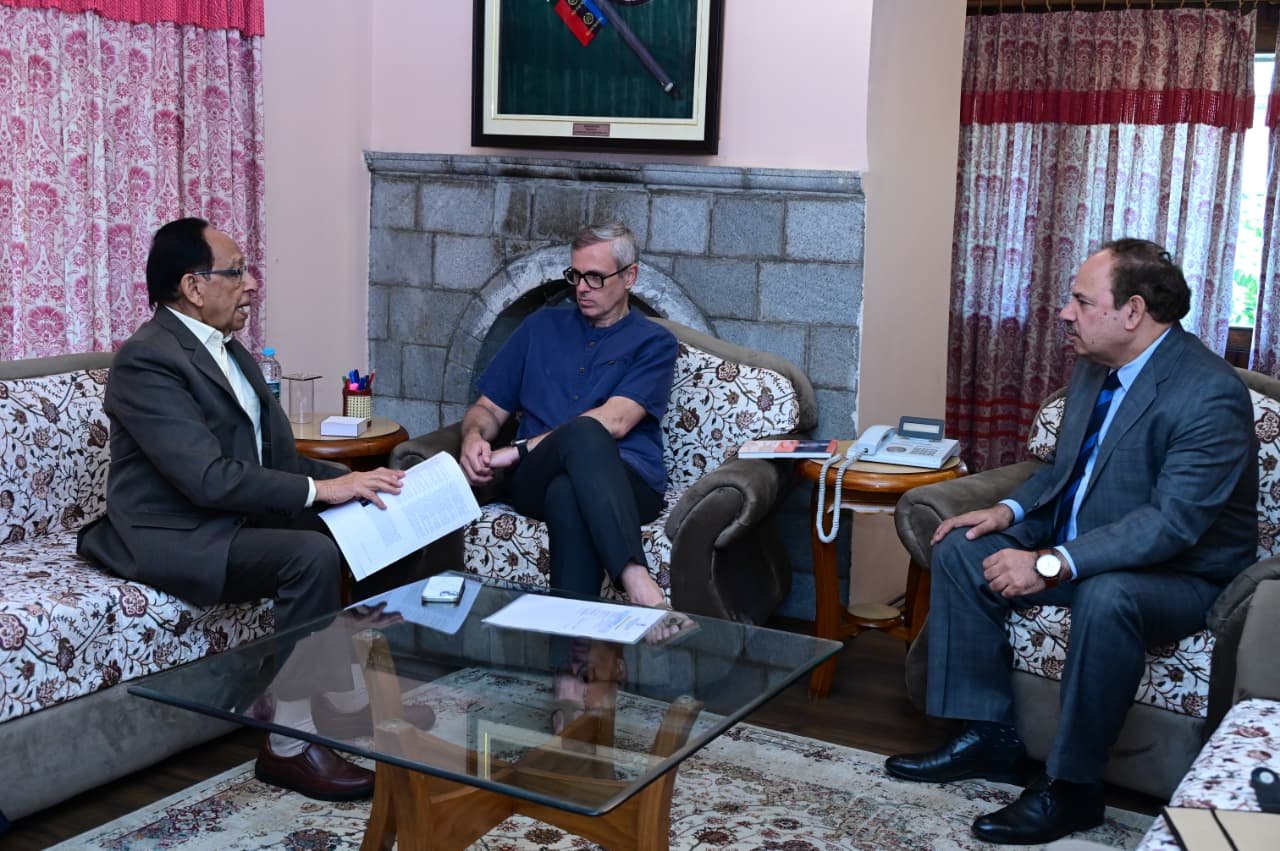
On September 24, renowned earth scientist Prof. Harsh K. Gupta met with Chief Minister Omar Abdullah to discuss enhancing earthquake resilience and disaster preparedness strategies in Jammu and Kashmir. This meeting took place at the Chief Minister’s Public Outreach Office, bringing together key figures dedicated to disaster management.
The meeting also included Advisor Nasir Aslam Wani and Prof. Shakil Ahmad Romshoo, Vice-Chancellor of the Islamic University of Science and Technology (IUST). Prof. Gupta, a former member of the National Disaster Management Authority (NDMA), emphasized the pressing need for developing earthquake-resilient infrastructure in Kashmir, situated within the highly vulnerable Himalayan earthquake zone.
In his presentation, Prof. Gupta referenced successful medium-term earthquake forecasts in the Northeast Himalayan region, advocating similar initiatives for Kashmir. He proposed essential measures for improving the disaster preparedness framework, including the establishment of an “Earthquake Safety Day.” This initiative aims to promote awareness among school students regarding earthquake safety.
Prof. Gupta’s recommendations extended to organizing mega-mock drills, reconstructing scenarios of historical earthquakes to prepare effectively, and ensuring strict adherence to earthquake safety construction practices. Additionally, he suggested deploying Earthquake Early Warning Systems along the Himalayan region to mitigate the risks associated with seismic events.
Chief Minister Abdullah acknowledged Prof. Gupta’s comprehensive insights and reaffirmed the government’s dedication to developing earthquake-resilient infrastructure in Jammu and Kashmir. He assured that the suggestions would be integrated into the broader disaster preparedness strategy, emphasizing public safety as a paramount concern.
This meeting marks an important step toward addressing the unique seismic challenges faced by Jammu and Kashmir. As the region continues to experience natural calamities, effective disaster preparedness and proactive measures become vital to safeguard the local communities.
The collaboration between experienced leaders in the field of earth sciences and the governmental framework seeks to create a safer, more resilient Jammu and Kashmir.
