



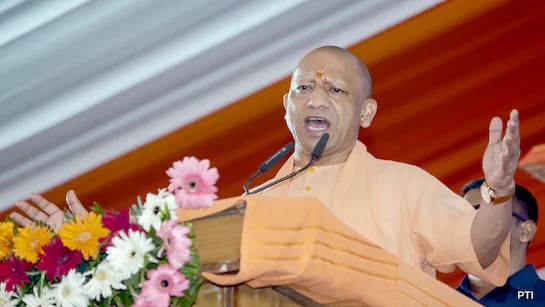
Uttar Pradesh Chief Minister Yogi Adityanath emphasized the historical implications of ‘political Islam’ on Hinduism during a recent event in Gorakhpur. While discussions around British and French colonialism frequently appear in history books, Adityanath pointed out that the impact of political Islam remains largely unacknowledged. He delivered these remarks during the programmes titled ‘Vichar-Parivar Kutumb Sneh Milan’ and ‘Deepotsav Se Rashtrotsav’ organized by the Gorakhpur division to commemorate the centenary year of the RSS.
During his address, Adityanath recalled the valiant struggles of historical figures such as Chhatrapati Shivaji Maharaj, Guru Gobind Singh, Maharana Pratap, and Maharana Sanga, who battled against the forces of political Islam. He argued that their efforts to protect Sanatan Dharma deserve greater recognition in the narrative of Indian history.
“Our ancestors waged major struggles against political Islam, yet this aspect of our history receives little attention,” Adityanath said, reflecting on the ongoing discourse surrounding colonial resistance while neglecting the ideological challenges posed by political Islam.
He tailored his comments to highlight the essential role that the RSS played in the construction of the Ram temple in Ayodhya. Adityanath stated, “While the members of the Samajwadi Party, the Congress, and the INDIA bloc questioned the Ram temple, RSS volunteers remained steadfast in their resolve that the temple would be built.”
He reiterated the sacrifices made by RSS volunteers, who faced suppression and violence, underscoring that the completion of the Ram Temple symbolizes their unwavering commitment. “The Sangh endured restrictions, and its volunteers faced police brutality,” he continued, asserting that the temple stands as a testament to their struggles.
As he elaborated on the dangers of political Islam, Adityanath expressed concern over the obscured activities promoting it under various guises. He claimed, “Such ideologies are permeating our society, leading to violence against the fabric of Hindu faith.”
In a startling announcement, the chief minister revealed that Uttar Pradesh has imposed a ban on the sale of Halal-certified products, alleging that profits from such transactions contribute to conversion, love jihad, and terrorism. “We must remain vigilant and protect our faith against influences that seek to undermine it,” he asserted.
Adityanath outlined five pivotal transformations that he believes will lead India towards becoming a developed nation. These include social harmony, reinforcing family values, environmental protection, promoting indigenous goods, and enhancing civic responsibilities. He emphasized, “For a developed society and a developed nation, society must lead, and the government must follow.”
As the nation engages with ongoing discussions surrounding religious identity and historical narratives, Adityanath’s remarks highlight the complexities intertwined with the concept of political Islam and its perceived impact on Indian society.
