



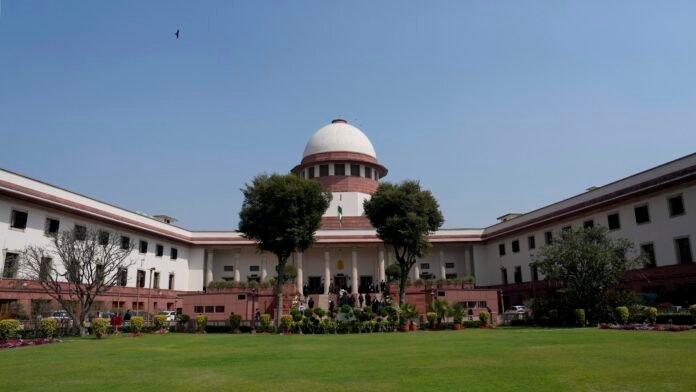
The Supreme Court of India raised alarm about a “growing trend” seen among judges issuing multiple judicial orders shortly before their retirement. Chief Justice Surya Kant likened this practice to a batter hitting sixes in the final overs of a cricket match.
This observation came from a bench including Justices Joymalya Bagchi and Vipul M. Pancholi during a hearing involving a Principal District and Sessions Judge from Madhya Pradesh. The judge challenged his suspension, which occurred just 10 days prior to his scheduled retirement.
Chief Justice Kant stated, “It is an unfortunate trend. There is a growing tendency of judges passing so many orders just before retirement.” He further remarked, “Petitioner, just before retirement, started hitting sixes. I do not want to elaborate further.”
This situation emphasizes a critical issue within the Indian judiciary regarding the timing and accountability of judges’ decisions.
The suspended judicial officer, with a retirement date set for November 30, faced a suspension decision made by the Madhya Pradesh High Court on November 19. His suspension followed two judicial orders he issued just prior to leaving office.
Senior advocate Vipin Sanghi represented the petitioner, arguing that the officer’s service record remained unblemished and acknowledged consistently high ratings in his Annual Confidential Reports (ACRs). He contended that judicial officers should not face disciplinary action solely for issuing judicial decisions.
Sanghi questioned, “How can an officer be suspended for judicial orders which are appealable and can be corrected by higher courts?” His argument highlighted a crucial aspect of judicial independence—that judges should be able to make decisions without fear of repercussion if their rulings are subject to review.
In a noteworthy response, the Supreme Court expressed agreement with the argument. The court highlighted that disciplinary measures usually do not arise from mere judicial errors; however, Chief Justice Kant posed a critical distinction: “But what if the orders are palpably dishonest?” This suggests a potential grey area where judicial error might be perceived as misconduct.
The court also pointed out an important development: on November 20, the Supreme Court directed the Madhya Pradesh State Government to extend the retirement age of judicial officers from 60 to 61. This extension shifted the petitioner’s retirement date to November 30, 2026.
Importantly, Chief Justice Kant noted that the judicial officer was unaware of this age extension when he passed the controversial orders. This revelation added a layer of complexity to the case.
As the hearing progressed, the Bench queried why the officer didn’t challenge his suspension directly in the High Court. Sanghi responded that the suspension stemmed from a Full Court decision, leading the petitioner to seek recourse in the Supreme Court directly.
Recognizing the complexities, the Bench noted that Full Court decisions have previously been overturned by High Courts, providing a basis for potential appeal.
Furthermore, the Court expressed concern over the officer’s method of seeking information on his suspension through the Right to Information (RTI) Act, stating, “It is not expected of a senior judicial officer to resort to the RTI route. He could have submitted a representation.” This comment underscores the court’s expectation of judicial decorum and procedure.
After deliberations, the Supreme Court declined to provide immediate relief regarding the suspension. Instead, it granted the judicial officer the liberty to submit a representation to the Madhya Pradesh High Court in hopes of recalling the suspension order. The Bench instructed the High Court to consider this representation and make a decision within four weeks.
This development reflects broader concerns within the judiciary about the conduct of judges, their timing in issuing orders, and the implications for accountability in the judicial system. As the Supreme Court shines a light on these issues, it signals a critical examination of norms that govern the behavior of judicial officers nearing retirement.
