



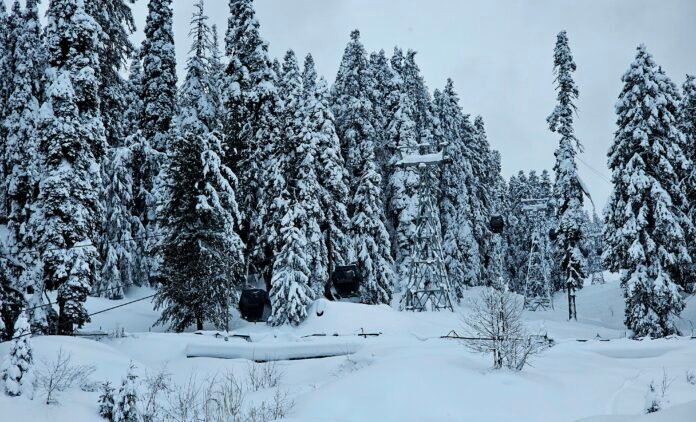
Night temperatures have increased significantly across Kashmir Valley as the 40-day winter period known as Chillai Kalan concluded on Friday. This shift brought partial relief from the extreme cold that typically grips the region during these winter months.
According to officials from the Meteorological Department, various locations, including Srinagar, recorded minimum temperatures exceeding the freezing point. The night temperature in Srinagar jumped to 1.3 degrees Celsius, a marked increase from the minus 0.6 degrees measured the night before. This reading is also 2.2 degrees above the seasonal average, indicating a warming trend.
Other places within the Valley that noted above-freezing temperatures include Konibal, which recorded 1.0 degrees Celsius, Pulwama at 0.1 degrees, and Kulgam at 1.1 degrees. Meteorological stations throughout the area have reported minimum temperatures higher than normal for this time of year.
However, cold conditions persist at higher altitudes. Sonamarg in the Ganderbal district remains the coldest area in Jammu and Kashmir, recording a low of minus 10.6 degrees Celsius, although this is a slight improvement from the minus 11.2 degrees recorded the previous night. Notably, the popular ski resort of Gulmarg experienced minus 9 degrees, while Pahalgam in south Kashmir registered minus 5.3 degrees Celsius.
Other stations also noted low temperatures, including Qazigund at minus 0.3 degrees Celsius, Kokernag at minus 0.6 degrees, and Kupwara at minus 3.1 degrees Celsius. These fluctuations highlight the ongoing challenges posed by winter in these regions.
Chillai Kalan, which commenced on December 21, traditionally signifies the peak of winter in Kashmir, accompanied by regular snowfall, particularly in higher altitudes. With the end of this chilling phase, the Valley now transitions into Chillai Khurd, a 20-day period known as the ‘small cold,’ followed by Chillai Bachha, the ‘baby cold,’ lasting for 10 days.
The Meteorological Department warns of potential changes in the weather patterns, forecasting a fresh western disturbance likely to affect the region starting Sunday. This disturbance may bring a new spell of wet weather, which could further shape the winter landscape of Kashmir.
