



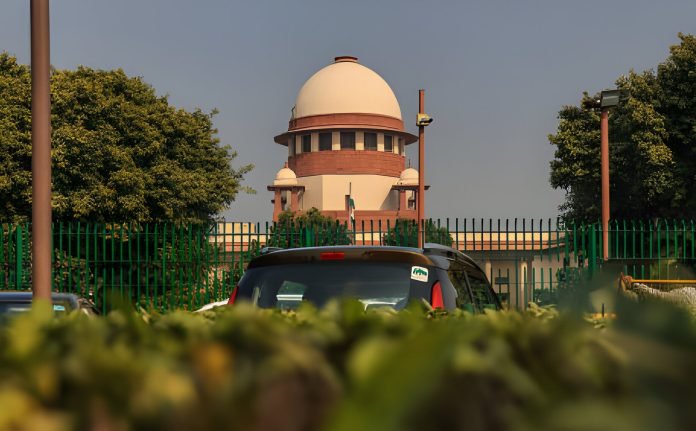
The Supreme Court of India on Wednesday referred the pressing issue of direct anticipatory bail applications in high courts to a three-judge bench. This decision mandates the bench to decide whether litigants can directly approach high courts for anticipatory bail or if they must first seek recourse from the sessions court.
A bench comprising Justices Vikram Nath and Sandeep Mehta emphasized the necessity of a larger bench for this matter. “This matter requires to be heard by a three-judge bench,” the court said, signaling its recognition of the complexities involved in this judicial practice.
Previously, the apex court appointed senior advocate Siddharth Luthra as amicus curiae to provide assistance on this issue, highlighting its significance in the judicial landscape.
On September 8, the Supreme Court expressed concern regarding the Kerala High Court’s frequent direct entertainments of anticipatory bail applications without prior recourse to sessions courts. “One issue that is bothering us is that in the Kerala High Court, anticipatory bail applications are regularly entertained directly. Why is that so?” asked the bench, inquiring about this deviation from standard judicial practice.
The judges referred to both the old Code of Criminal Procedure and the newly introduced Bharatiya Nagarik Suraksha Sanhita (BNSS), 2023, which outlines a clear hierarchy for bail applications. Notably, Section 482 of the BNSS addresses directions for granting bail to individuals who fear arrest.
“It doesn’t happen in any other state. Only in the Kerala High Court… applications for anticipatory bail are regularly entertained directly,” the bench pointed out, aiming to examine the ramifications of this exceptional practice.
The discussions stemmed from a plea by two men who challenged a Kerala High Court order that denied them anticipatory bail. The petitioners approached the high court without first seeking relief from the sessions court, which led to the Supreme Court’s intervention.
The Supreme Court noted that this direct approach may hinder courts from acquiring adequate factual records that typically the sessions court would compile. “We are inclined to consider whether the option to approach the high court is a matter of choice for the accused or whether it should be mandatory to first go to the sessions court,” articulated the bench.
Accompanying this deliberation, the top court also issued a notice to the Kerala High Court and its Registrar General, urging a response regarding this unusual practice. The outcome of this discussion could redefine procedural norms for anticipatory bail applications across India.
