



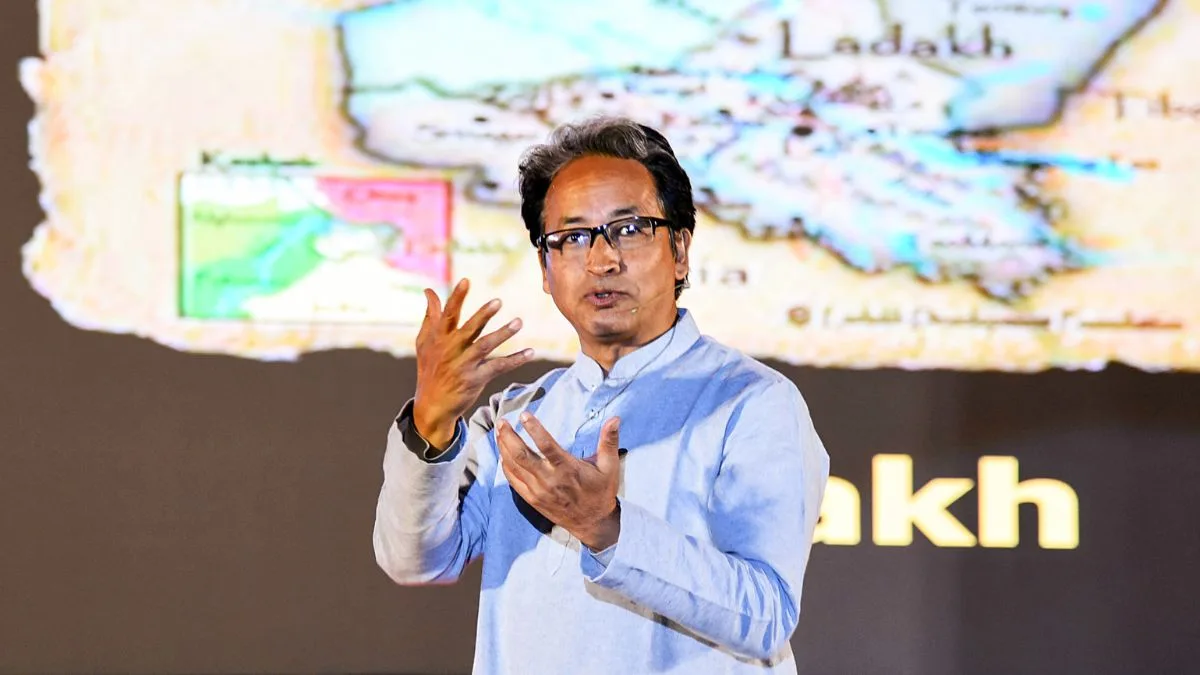
Climate activist Sonam Wangchuk has faced nationwide backlash following his detention under the National Security Act (NSA) on Friday. The Ladakh administration promptly transferred him to Jodhpur Jail in Rajasthan the same day.
The midnight announcement detailed how Wangchuk was arrested amid escalating violence in Leh, where protests for statehood and the implementation of the Sixth Schedule led to tragic casualties. Four people died and over 90 sustained injuries during police firing.
Wangchuk initiated a hunger strike on September 10, urging action for the Sixth Schedule and protections for Ladakh’s fragile ecosystem. However, he concluded his fast on September 24, amidst the violent unrest in the region.
The communities of Ladakh reacted strongly to his detention. Social media platforms buzzed with criticism, with many describing it as a “black day” for the region. Calls for the resignation of Lt. Governor Kavinder Gupta emerged, attributing blame for the police violence that claimed innocent lives, including that of a retired soldier.
The official announcement emphasized Wangchuk’s previous activities: “Sonam Wangchuk, S/o Shri Sonam Wangyal, R/o Uley Tokpo, Leh, has been detained under the National Security Act, 1980.” The administration accused him of activities detrimental to state security, claiming his actions triggered the violence that marred Leh.
The press release further elaborated that despite clear communication from the Government about a meeting with the High-Powered Committee (HPC), Wangchuk continued his hunger strike with perceived ulterior motives. His speeches, which referenced the Nepal agitations and the Arab Spring, allegedly incited the protests leading to the destruction of community property and attacks on police.
Authorities claimed, “This episode could have been avoided if he had prioritized dialogue with the government.” His actions have been characterized as provocative, necessitating his detention to ensure peace in Leh.
In their statement, the administration underscored the necessity of restoring calm to Leh, prompting the decision to detain Wangchuk far from the area. They defined this action as a precautionary measure to prevent any further disruptions that might arise from his continued presence.
As the situation unfolds, the broader implications of Wangchuk’s arrest and its impact on the, already strained, socio-political landscape of Ladakh remain to be seen. Activists and residents of the region watch closely, questioning the balance between security and civil liberties.
