



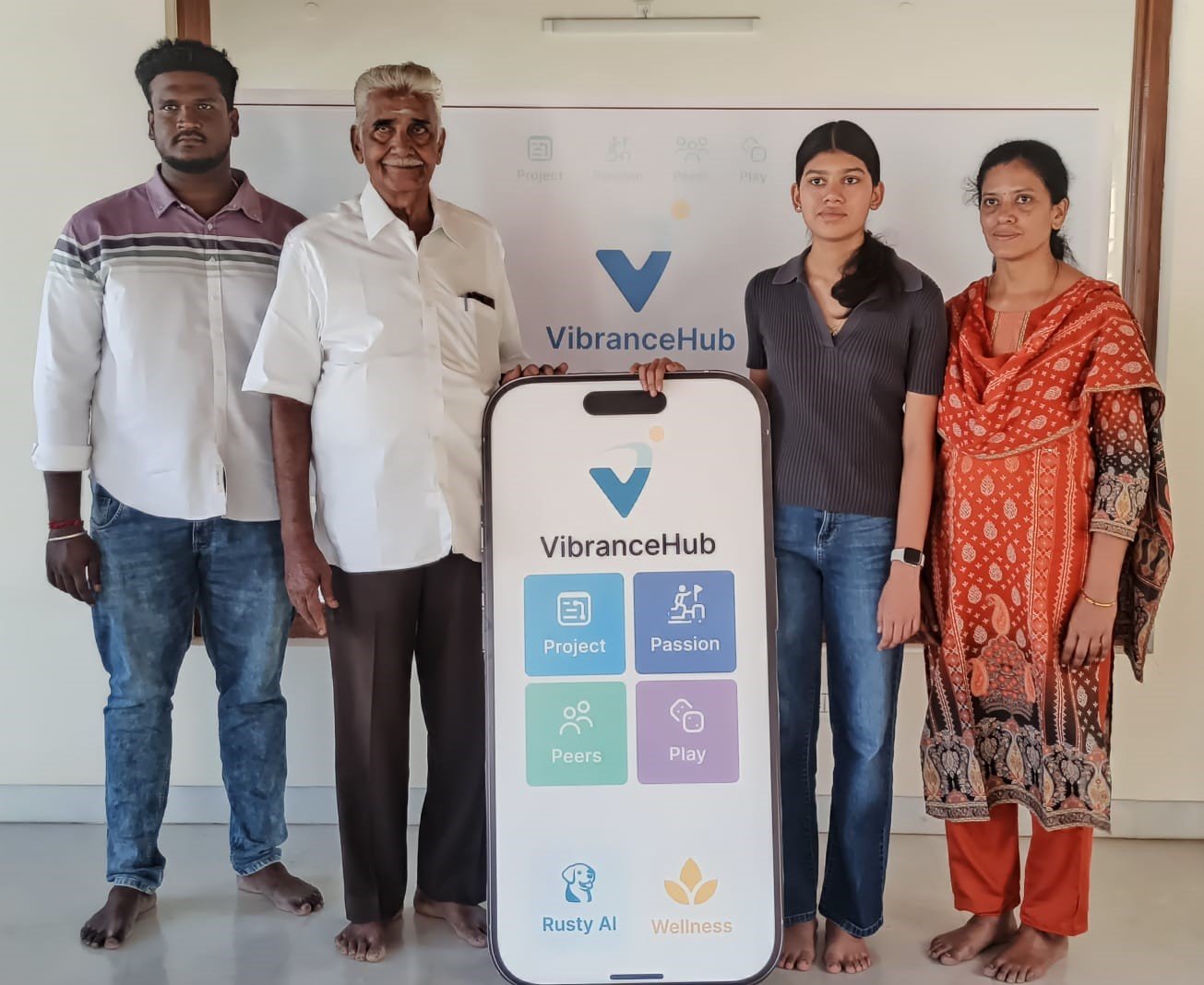
COIMBATORE — Rithanya Sivaram, a Class 12 student at The Indian Public School, has launched Vibrance Hub, a platform that merges project-based learning, peer collaboration, and wellbeing support. This initiative addresses a critical educational gap as India prepares its students for an AI-dominated future, where creativity and sustained innovation matter more than mere rote knowledge.
In the age of AI, which commoditizes information, what truly matters is the ability to create, think innovatively, and sustain that creativity long-term. “In the age of AI, information is commoditized. What matters now is what you can make, how you think, and whether you can sustain creative work over time,” says Sivaram. She emphasizes that while Atal Tinkering Labs offers students tools and space for tinkering on a national level, Vibrance Hub provides the community and wellbeing practices necessary for transforming interests into long-term projects.
Built on MIT’s Lifelong Kindergarten framework—Passion, Projects, Peers, and Play—Vibrance Hub recognizes that maker education goes beyond mere construction. It aims to develop computational thinking, the resilience to iterate, and collaboration skills—qualities that artificial intelligence cannot replicate.
Children instinctively approach problems with fearless experimentation, but excessive focus on standardized testing and the “correct answer” mentality often diminishes that confidence over time. They grow self-critical and cautious, hesitating to try new things without assured success. This erodes their natural creativity, leading them to believe they are “not creative people” anymore.
In many ways, Vibrance Hub is a modern return to India’s educational roots. Before Macaulay’s Minute on Education in February 1835 enforced a rote-learning system that produced clerks for colonial administration, India embraced the gurukul tradition. This ancient system emphasized experiential learning through active creation and problem-solving. For instance, students learned metallurgy by forging, astronomy through observation, and medicine by practicing.
The National Education Policy 2020 strongly advocates reviving this maker-centric approach. It recognizes that India’s future prosperity depends on nurturing creators and innovators rather than rote repeaters of information.
Additionally, the Atal Innovation Mission (AIM), launched in 2016 by NITI Aayog, seeks to operationalize this maker-centric philosophy at scale. AIM directly addresses the NEP 2020’s directive to foster creativity and innovation by establishing robust infrastructure for hands-on learning throughout the country.
Vibrance Hub stands as a testament to the potential of young innovators and the importance of educational reform in India. As Sivaram states, “We need to think differently. The future belongs to those who can create and innovate.” In this rapidly evolving digital era, initiatives like Vibrance Hub not only inspire students to explore their passions but also equip them for success in an AI-driven world.
